
a professional update
Brice Rosenbloom & Winter Jazzfest; Big Ears Conversations About Music & more

I’ve been thinking a lot lately about what it means to keep doing this work, day in and day out, in an industry that feels more and more precarious, teetering on the edge of collapse. This music infrastructure collapse is also occurring in a political and social climate that feels less and less stable. It feels more and more scary.
Much of my energy these past months since I last posted has been tied up in my management work for Adam O’Farrill, DoYeon Kim, Nicole Mitchell, Myra Melford, and Tarbaby as well as my development and marketing work for NYC Winter Jazzfest. Additionally, I continue to be inspired by my podcast production work on Big Ears: Conversations About Music. These two organizations which I’m blessed to work on, have become mirrors for my own values.
With Winter Jazzfest, this year’s theme, Still We Rise, inspired by the poem, “Still I Rise” by the late Dr. Maya Angelou has felt like an anchor, a way of insisting that Black culture and the communities around it cannot be erased, no matter how loud the forces of erasure get. I mean…wow.
Some have accused Winter Jazzfest in the past of virtue-signaling with its emphasis on social justice. But founder Brice Rosenbloom’s commitment is rooted in his personal history and values — he didn’t simply adopt this as a marketing angle; it follows from his experiences and convictions.
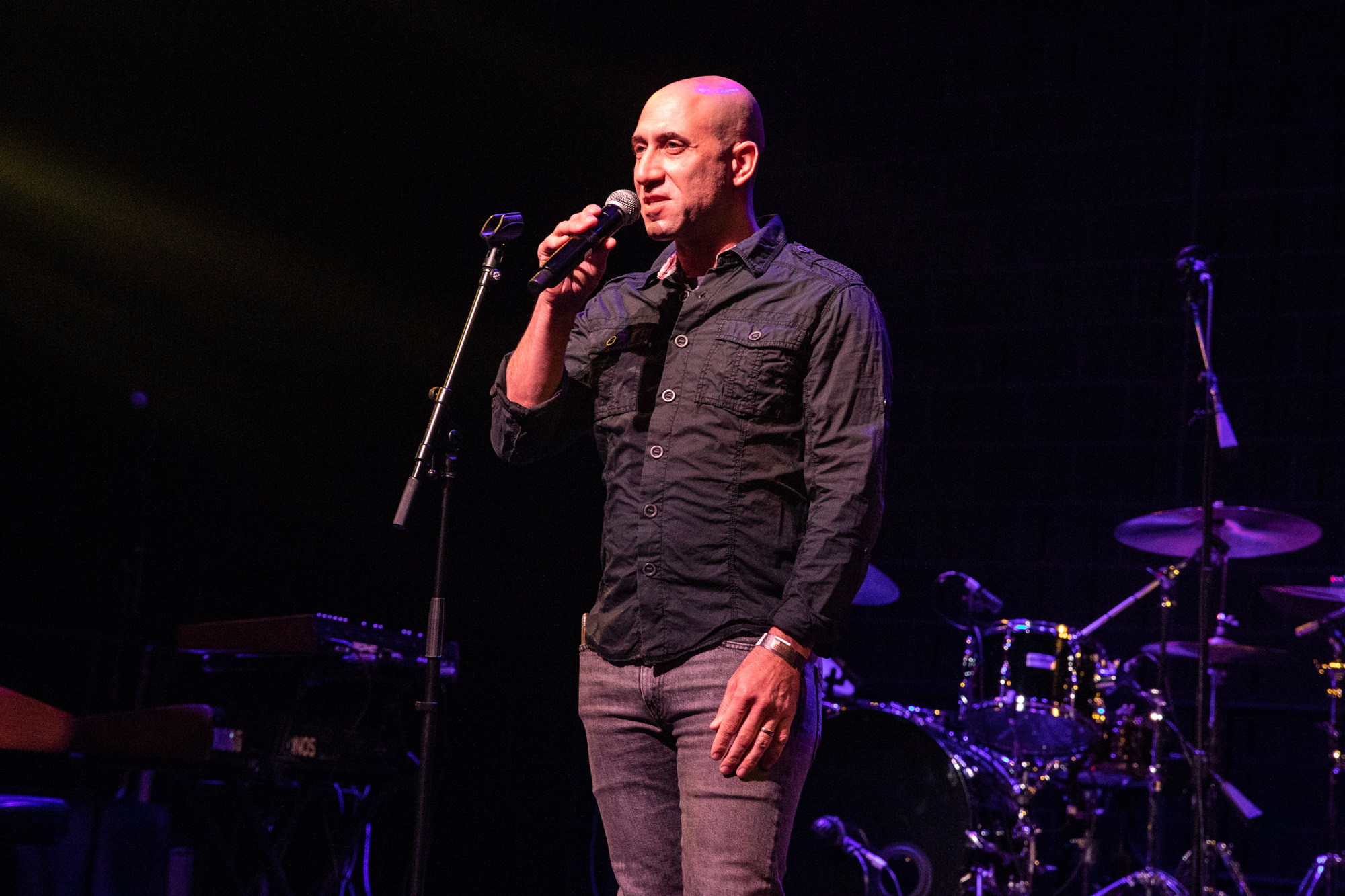
As a college sophomore at Northwestern University, Rosenbloom volunteered to help bring the late South African saxophonist Zim Ngqawana to campus. That experience led him to study for a semester in Durban and briefly in Johannesburg, where he immersed himself in the community of South African jazz musicians — an early example of connecting music, culture and social context.
The seeds of activism can also be seen in his programming philosophy. From the earliest iteration of Winter Jazzfest in 2005, Rosenbloom sought to spotlight artists outside the mainstream jazz circuit — artists he believed deserved greater attention and whose music often carried social meaning. Over time, Winter Jazzfest added explicit components for panels, conversations and artistic works that address equity, race, gender and the role of music in civic engagement.
In the COVID years, when live performances ground to a halt, Rosenbloom helped launch the Jazz Coalition — a grassroots effort that raised funds to commission new work by jazz musicians facing economic hardship. At the same time he joined the steering committee of The Blacksmiths, a coalition of artists and culture-producers focused on arts as a vehicle for Black liberation and equity.
Rosenbloom’s activism isn’t peripheral to his work; it’s woven into the fabric of how he programs shows, structures the festival and engages with the broader music community. Rather than relying on token gestures, he has made a sustained, evolving commitment — drawing from his early encounter in South Africa, seeing music as a conduit for cross-cultural understanding, and building platforms for voices that might otherwise be marginalized.
Rosenbloom’s Winter Jazzfest is not just a jazz festival—it’s a broader cultural project. By interweaving creative practice and social concern, he reinforces the idea that music — particularly jazz, which is directly connected to Black history — can be a form of both celebration and resistance.
And that brings us to this moment. Saturday’s #NoKingsDay protests — a nationwide mobilization against rising authoritarianism under President Donald Trump and his administration, spanning thousands of rallies across all 50 states — underscore Rosenbloom’s spirit of collective voice and resistance. Winter Jazzfest’s ongoing efforts to center Black music, culture and social justice now mirror a broader public moment: when citizens and artists alike refuse to be silent, when the stage becomes a platform for change, and when art and activism converge.
Before I go, here are a few other things I’ve been working on.

For Big Ears, the conversations I’ve been producing continually remind me of how much I love expanding the dialogue around music, giving artists room to connect their work to something bigger, whether that’s civic life or cultural history.
I was fortunate to set up a conversation recently between noted new music writer Steve Smith and composer Lisa Bielawa regarding her commission, Knoxville Broadcast, “a large-scale site-specific ‘spatial symphony’ that united hundreds of musicians from across Knoxville in three free public performances at World’s Fair Park.” Those performances concluded today. I learned a lot about Lisa’s past site-specific works as well as her journey through music, which took a very curious path by dint of who her father was. Have a listen.
We also produced two prior episodes for this new season of the podcast on Cécile McLorin Salvant with critic Natalie Weiner, as well as a preview of the 2026 festival featuring Ashley Capps with Ann Powers.
Expanding my role as manager for O’Farrill and Kim have been major parts of my professional life in 2025, shaping the rollout of both of their forthcoming recording projects. I’m also thinking long-term about where each wants to go and how to help them get there. I will write in more depth on both Adam and DoYeon soon.
There have been some bright spots in my PR work as well: Linda May Han Oh’s Strange Heavens receiving strong, thoughtful coverage; Lex Korten’s Canopy making its way into the conversation as a debut of real originality; Jacob Garchik’s Ye Olde II is sparking critical curiosity with its unusual medieval-jazz meets sci-fi blend. And Luigi Grasso’s Gil Evans-inspired timbrally diverse compositions for the NDR Bigband in Hamburg has begun to receive some nice plaudits.
Those kinds of wins remind me that publicity still matters, even as the media landscape contracts and shifts and does not favor any central news source, but rather exists as a patchwork quilt of divergent agendas, covering myriad artistic scenes, often with little overlap between outlets. When the right story finds its moment and willing ears, it can amplify an artist in ways that ripple outward; especially here on Substack.
Recently Will Layman has been crushing it with album reviews on his Substack Big Butter & Egg Man: Layman on Jazz and Culture. Yes, he’s covered almost all of the above clients but his broader cultural coverage represents the rather rare critic who often engages with music that’s not often in the critical conversation. In other words, he’s a free thinker. And all of us in Substack-land are beneficiaries of his years of accumulated insight. Let’s collectively welcome him to Substack after many years at PopMatters.
And just the other day, my old buddy the audiophile Stereophile columnist, Ken Micallef came over and interviewed me for his YouTube channel, which focuses on jazz vinyl and gear reviews. I talked about five recordings that I love from my vinyl collection that feature saxophonists:
Woody Shaw - Blackstone Legacy (Contemporary) - featuring Gary Bartz & Bennie Maupin
John Coltrane - Giant Steps (Atlantic)
Cannonball Adderley Quintet - Live in San Francisco (Milestone)
Woody Herman - Woody & Friends: At the Monterey Jazz Festival (Concord) - featuring Stan Getz, Frank Tiberi, Bob Belden, Dick Mitchell, Gary Smulyan
Darius Jones - Legend of e’Boi (The Hypervigilant Eye) (AUM Fidelity)
Music has the power to hold us together. We just have to do the work and inevitably reap its benefits from the stage, from the audience and whenever we gather for music.
(Meant to write how wonderful this was Matt)
(Apparently didn’t?)
So I’m saying it now!
Thanks for the updates and listening recs Matt! So glad that you are keeping in the game and bringing these artists and projects to light.