

Looking Back & Facing A New Reality
a moment of measured self reflection + a look back on years of impassioned commentary

In a recent text exchange, I revealed to a friend “a big part of my personal and professional identity was tied up in my ability to get people placements in the New York Times from the time I was 24 to the time I was 40. And then that all fell away in an instant.”
For years and years, long before Substack, I’ve been writing down my thoughts on music. I’m not really a journaler. I don’t write down my thoughts just for myself, although now that I’ve looked through these old Facebook posts and some even older blog posts, I’m starting to think, maybe I should’ve.
As I take stock of my career to date, at this strange juncture, it’s both interesting and jarring to reflect on the things that I’ve shared with others in a semi-public forum over 20+ years.
I recently had a come-to-Jesus moment with a friend, who alerted me to the fact that a lot of the time I call or text him, I’m upset at one thing or another in the jazz world. I’ve become the kind of “get off my lawn” curmudgeon I so greatly abhor.
I am realizing that I started this Substack not just to build or shine a light on community by telling the stories of “the side people,” but to create the beginnings of a memoir; or at least to make some sense of my life and work in the broader context of the musical scenes I operate in. I realize that I’ve strayed quite far from my initial intent, which was to tell the stories of those in the industry whose stories don’t get told. But maybe, I just really wanted to tell my own all along.
My hope was to share my accumulated knowledge and reflect on my community, which I’ve chosen to be part of; or really which chose me at the age of 13 and never let go.
I think I’ve told this story here before, but for those who don’t know or are new here due to the last two posts, I almost became a journalist. In fact, if you search back far enough, you can find my bylines in AllAboutJazz.com as well as the Pittsburgh City Paper and the Carnegie Mellon Tartan.
In a fateful encounter with the critic Nate Chinen, following a Jazz Journalists Association panel at the long-defunct IAJE Conference, I was advised to check in on a private meeting of publicists, including independent, ones (the folks at DL Media (Don Lucoff, Stephanie Brown, Brad Riesau, Jason Paul Harman Byrne, Jana La Sorte, Terri Hinte), and those working for organizations or labels (Charlie Bourgeois, Caroline McClair, Jennifer Niederhofer, Zooey Tidal Jones). Had I not attended that meeting, I might not have had the career I’ve had in PR. And I’ve had a very good career.1
But at times, as a result of my chosen career path, I’ve felt like I’ve not been allowed to express my true opinions.2 What sets me apart from most of my PR colleagues (aside from someone like Judy Miller Silverman) is that I’ve always tried to tell the truth or my truth, when it maybe wasn’t completely “appropriate” to do so.
To a certain extent, this proclivity has likely made me a pariah in some cricles. It has certainly cost me business. And I’ve definitely hurt some people’s feelings. I do feel bad about that, while at the same time, I could never see myself living a life where I hid my feelings or presented myself inauthentically. It’s just not part of my constitution, for better or worse. I only know how to be me.
Recently, some folks have alerted me that people can feel deeply unsettled by my commentaries on the state of the industry. People often prefer uncomfortable realities to remain unspoken. Some are likely threatened by my frankness, some may find them superfluous. Others have told me they feel liberated by it or find it refreshing.
What I do know, is that the series of posts that preceded this one were partly motivated by my own unhappiness in my role as a PR professional over the last decade. They were motivated a deeply broken system, in which most people have abandoned traditional media in favor of scrolling and not paying for their news or criticism, to the detriment of the critical establishment. Getting one’s news from headlines or graphics as opposed to reading real reportage is a sad sign of the times.
A lot of my unhappiness stems from uncertainty for my future and how things have turned out for so many of the musicians I dedicated my life to supporting and nurturing. Often times, I worry about how my profession might have become irrelevant.3
I feel like my skillset may not prove marketable enough to have well-paid work into my 60s, though one never knows. However, in the last two years, I’ve been presented with opportunities to create a podcast for Big Ears Festival that has vastly changed my life. Plus there’s some new contract work I’ve picked up since January in the offing, that I’m not ready to widely announce, that will take me in a much more curatorial and non-promotional direction in the coming years.
In my mid twenties and early thirties, I was extremely successful and one might say influential in promoting the careers of my artists. I enjoyed multiple years with number one albums on critics‘ year-end lists, acclaim from the jazz press, the New York Times, All Songs Considered, Weekend Edition or Fresh Air with Terry Gross; even the occasional Rolling Stone review. Later, I expanded my sphere of influence into Europe, Japan and Australia, by regularly attending jazzahead; wanting to offer non-U.S. press opportunities to my mostly U.S.-based clients.
The relationships that I’ve built from 2006 to the present still provide me with ample opportunity to make a living and to have some degree of influence over radio play, some major publications and now, festival bookings. But at a certain point, I cannot accept people’s money for PR if I don’t feel like I can bring them value, commensurate with what I feel I need to charge to adequately do my job. This does not apply to everyone who approaches me, but I do have to turn down far more work than I used to; often times for people whose music I truly love. Sometimes I even have to think critically about whether an artists ethnicity and gender identity will “play” in the current media scene. I hate this, but these are factors I can’t avoid if a significant amount of money (for an artist) is on the line.
As they inevitably do, the tides of the industry and the music that is most in favor have changed. Different kinds of music are more popular or garner more critical acclaim. And I no longer feel like I am part of, or buy into the zeitgeist, if I ever really did. I feel like time has passed me by and I’m still fighting for the things I believed in so deeply in my twenties, many of which are not commercially successful or even critically “relevant.” And yet, three of the artists I manage are under 35-years-old and the world of possibility for them seems vast.
In a recent text exchange, I revealed to a friend “a big part of my personal and professional identity was tied up in my ability to get people consistent placements in the New York Times from the time I was 24 to the time I was 40. And then that all fell away in an instant.”
That loss of infrastructure and possibility dealt a massive blow not just to my ego, but to the media ecosystem surrounding jazz and creative music. There is no mass media outlet for young musicians in New York to be covered in their nascent years until either they scrounge up enough money for a publicist or reach a certain threshold of Instagram or YouTube followers or Spotify monthly listeners. And for art music, that is rarely possible.
My friend said to me, “For you, for me, for anyone in this industry, adapting to the changing climate is like 70% of the job. All the platforms crumble.”
“I am adapting,” I said. “But I can still complain privately to you.”
The reality is that so many artists, managers and labels don’t know that the outlets they came to rely on for coverage have disappeared. So many still come to me as a publicist thinking it’s possible for them to achieve outcomes that simply no longer exist.
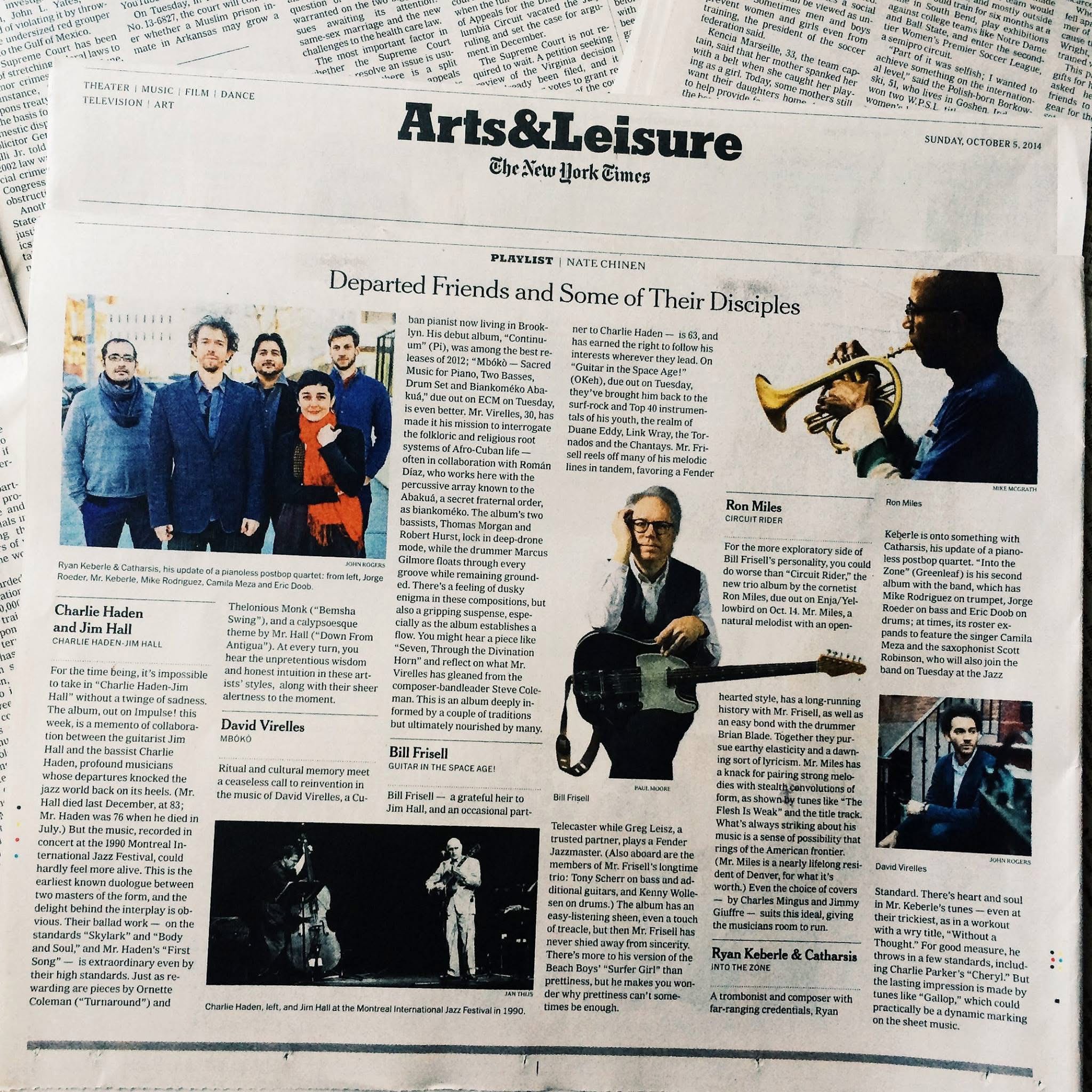
“The entire world of culture journalism has evaporated,” my friend said to me. The Times is just a bellwether. But people still want and need to tell stories, so they keep telling them somehow.
It’s something of a miracle that the old way of things lasted as long as it did, but it was never going to be a permanent scenario.
I do see value in the work that I do in terms of making people aware of music that they wouldn’t have known of otherwise. I see the work of my jazz colleagues as vital, and sometimes perhaps more effective or inspired than I feel now. And as I said in my previous posts, there are other elements that we are burying our heads in the sand and ignoring. Some of them include digital marketing. Others include email newsletters, DIY touring (getting scrappy sleeping on couches, not expecting anything because of their training), creating your own series and building community not only locally but forming touring networks with other artists.

I stand by my two previous pieces and promise I will bring things full-circle to offer multiple truly meaningful solutions one can can do as an artist or marketer to further your artistic career and your happiness; and consequently myself, as a strategist and manager to promote this art form.
The way this post started was by collecting a series of Facebook posts, rants, reviews and other observations that I’ve written down over the years and largely forgotten about.
I’m leaving some of that below, not to show how smart I am or how much insight I have, but to illustrate how the media has disintegrated over time thanks to our own societal habits (which was precipitated and possibly pre-planned by big tech).
I believe that there’s not currently much we can do about the state of mainstream legacy media. We can show up, do our best and hope this amazing musical art does not go undocumented. Many of my observations of the past remain true and relevant. I think many of these topics deserve future consideration in this space.
As part of this process, I’m forced to reconcile my own perceived irrelevance (as a publicist and in the context of a media ecosystem dominated by algorithms) with the good work that I have brought to my clients, and to my community and the amazing life and career I’ve lived so far. And in some respects, how my life may be better than it has ever been, despite all the changes.
Don’t worry. I’m not giving up. I’ve got a wonderful wife, a beautiful and whip-smart daughter and a beautiful Australian Chocolate labradoodle.4 I’ve got a network of friends and colleagues, literally stretched around the globe, who are united by this music.
I still intend to tell the stories of “The Side People” but you’ll have to continue to endure my need for periodic self-indulgences that I need to put on paper to wrestle with. Perhaps a private diary would be better, but I like feedback and, to some extent, validation.
With that said, here is a collection of things I’ve written over the years that either I’m proud of having said or still hold true.
Thanks for your time and your support.
October 16, 2016 lamenting media consolidation and a reflection on what we have lost.
It’s a real shame we are living in a media landscape where the powers that be have done away with album reviews and often any kind of regular music coverage in most national or regional dailies. There are amazing new records out on the market right now by Charlie Haden’s Liberation Music Orchestra and too many to list on so many other smaller labels like Sunnyside, Posi-tone, Savant, Smoke Sessions, Motema, Mack Avenue, Pi, Greenleaf Music, Ropeadope, Whirlwind, Pirouet, Delmark, Intakt, International Anthem, Shifting Paradigm, Cuneiform, Clean Feed, Criss Cross, Fresh Sound New Talent, Run Grammofon, Smalltown Supersound, Laborie, Edition, Naim, Jazz Village and totally independent self releases. No one knows about these because no writer can even get an assignment to cover them in an outlet of national import. There are obvious exceptions like Pitchfork and the Wall Street Journal, who thankfully are still covering albums but the New York Times, LA Times, Chicago Tribune, Miami Herald, SF Chronicle, Boston Globe, Washington Post, Houston Chronicle, Seattle Times and so many others, have limited coverage of records to mostly video playlists or annotated singles columns; maybe an occasional short gig preview and quite sparingly.
The prognosis at alt weeklies is just as bad. In a season where there’s a new Liberation Music Orchestra album (a major event, which I have no affiliation with), it’s a shock to me that I’ve seen no major publication or national radio program cover this amazing record, except Down Beat giving it 5 stars in their new December issue.
There are so many other amazing records out there right now like Dhafer Youssef’s Diwan of Beauty and Odd or Wolfgang Muthspiel’s Rising Grace and so many more that are meeting the same fate not because many people (labels, publicists, artists, freelance journalists) aren’t trying to get them covered, but because the general cultural editors are dictating a new race-to-the-bottom agenda favoring wht appeals to the lowest common denominator.
It’s happening right in front of us. Until very recently, the Times was covering jazz extensively but the abrupt exit of Ben Ratliff and a new set of priorities and an approach to covering “pop music” (yes jazz must compete for same space with pop), the outcome is NO MORE live jazz reviews except major festivals, themed pieces on an artist or trend and NO MORE SUNDAY PLAYLIST in the paper or full fledged CD reviews (a longstanding institution that should come back if we the readers place enough pressure on editorial leadership).
Classical music would be up in arms if they saw their coverage take this kind of blow and they have been in the past, because generally they are more organized and rally around big institutions with clout. What if Wynton [Marsalis] raised a stink? He has the power and the pulpit to do so. Or he could easily do what National Sawdust did and have an in-house editorial staff that wrote about the music and the scene from a curatorial but also critical bent.
That would be progress. I know - be careful what you wish for. Yes there’s the election but it’s bigger than that. What are we going to do about it? Let’s take some real action. I have a letter drafted to the Times that we could just as easily send as Letters to the Editor of every major daily and weekly newspaper in the US.
And don’t give me the relevancy argument. How many restaurants around our entire country advertise “free jazz brunch” and how many markets have performing arts centers and clubs not being covered at all by these major dailies.
And if they won’t listen, we need to encourage more and better websites and blogs and podcasts to cover this music from an array of voices - from critics to audience to artists! Bigger discussion. Will leave it at that…
April 23, 2017 on venues not promoting gigs adequately when they totally could. This will certainly be a topic of a future post on The Side People.
It is truly shocking how some venues that have real budgets to promote gigs, especially when tickets are slow to sell, do not. [There will be a chapter in my forthcoming book on this 😉].
Of course, the process of creating awareness is a balance between being “persistent” and “annoying” to sell tickets. However, some places get it and some rely almost entirely on the artist to do the majority of the legwork. Sometimes they rely on the names in the band to magically sell tickets.
It is completely unfair when the venue has money and resources and the artist is being paid a terrible door split or low guarantee. Many artists, even established ones are left with the burden of often hundreds of dollars in promoted Facebook ads, online ads, even promoted email blasts from third party lists that can be “bought” to draw attention and hopefully advance sales.
Decimation of the arts media has not helped this conundrum for sure. We need more targeted purchasable mailing lists at economies of scale, but we also need organizations in each city that are trusted sources to get weekly gig info out to fans (a la Revive Music in New York, CapitalBop in DC, etc.).
And we need venues to aggressively market to past ticket purchasers of similar artists; get creative when thinking about how to do this. They have the data. They just need to use it intelligently. We may even need to go back to direct mail in some cases. This is a big problem.
May 6, 2017 on the need to pay for media, if we want to see it keep going.
I realize that many of the people who read me are musicians (most of whom can’t afford many luxuries). But if you make a decent living and you don’t pay for journalistic content, please re-consider your position by paying or subscribing to at least one newspaper or magazine (digitally or in print) so that quality journalism doesn’t completely go away.
I read a very scary article in Talking Points Memo this week that pointed to the fact that Google and Facebook control the lion’s share of advertising on websites across the entire internet. We may begin to see online news outlets go the way of newspapers as fewer and fewer are able to sell ads directly to advertisers which in turn affords them operating revenue to pay their writers, editors, IT departments, janitors, etc.
Look at subscriptions as a form of membership or being a stockholder in something’s future. I pay for my NY Times, Wall Street Journal, New Yorker and Washington Post subscriptions as well as digital editions of JazzTimes, Down Beat, Stereophile, Jazzwise, Jazziz, Modern Drummer, Bass Player, Relix, Nextbop (through a monthly Patreon donation of $5/month) and a few others. Granted, for me, some of these are tax write offs in my profession. NB: These expenses can be classified as “research materials.” Many who are self employed, can write off subscriptions on your taxes too.
I just gave some money to The Guardian because they have never put up a paywall. I enjoy all of this content and writing on a daily basis. Why should I expect it for free? I realize that the prevailing notion is that journalists by-and-large make more money than musicians but that is decreasingly true. Most work as freelancers (like musicians) and work for similar wages to musicians per gig/article; often less. It’s similar to using Spotify or YouTube to consume your musical content. I get that people have rent, mortgage, student loans, car payments and we all need to feed ourselves, but we should not forget about journalists and news outlets who do the work to uncover the stories — shocking, enlightening, inspiring, even maddening — that change our perspectives on the world in one way or another.
Many of them we share here on Facebook. We need to do our part to ensure that journalists and media outlets continue to have sustenance by paying for their efforts. Every subscriber helps stave off extinction!
September 16, 2017 on Sara Serpa at the Drawing Center. This work was released on the 2020 Biophilia album Recognition.
Saw an arresting show last night presented by The Stone at The Drawing Center (35 Wooster St) by Sara Serpa with Mark Turner and Zeena Parkins. It was called “Recognition” and focused on the reprehensible legacy of the Portuguese colonial empire with beautifully poignant texts by Amílcar Cabral, leader of the Guinea-Bissau 🇬🇼 & Cape Verde 🇨🇻 liberation movements in the 1960s & 1970s. Cabral was assassinated by his comrades with the help of the Portugese secret police (PIDE) in January 1973.
Clearly this project took Sara many months of planning, both musically and from an audio-visual standpoint (the documentary-style accompanying film was edited and realized by Portuguese filmmaker Bruno Soares) to bring this to fruition. The video footage came from Sara’s grandfather who was born in and lived in the former Portuguese colony of Angola. His footage included images of the of the Estada Novo regime, the de facto slave chattel population of Angolans mining salt and other natural resources as well as resistance footage. The Portuguese dictatorship was overthrown in the Portuguese revolution of 1974-1975, a year after Cabral’s death.
It was extremely moving and well put together. I hope more audiences get to see it.
September 28, 2017 - A short follow-up on the Serpa “review.”
I posted that cursory “review” of the Sara Serpa gig not because I work with her (which I don’t) but rather because so many AMAZING events go on every night and there are no more NY Times reviews or really any live show reviews unless someone shares their experience here on Facebook. All we have is LucidCulture and JazzTrail and Facebook recommendations, off the top of my head right now reviewing gigs with any kind of thoroughness or regularity.
So to all the people who regularly go to gigs, I would encourage you all if you see a great show, say something! Doesn’t require pictures. Just writing something down and sharing it can go a long way towards general awareness.
All this goes for previews as well to get people out to these shows. I will admit that Sara’s email list coupled with the event invite on Facebook + being in the city inspired my attendance but also this great intriguing lineup.

January 6, 2018 on two young and promising jazz writers talking it down with the perennial dolt, Jon Caramanica.
The millenials aka essential new voices of jazz criticism Natalie Weiner and Giovanni Russonello went deep on the NY Times Popcast this week with host, and self-professed jazz know-nothing qua pop music critic Jon Caramanica on the big ideas and trendsetters from 2017 in the “jazz” world. Subjects included:
Makaya McCraven, Nicole Mitchell’s Mandorla Awakening, Jaimie Branch’s Fly or Die, new U.K. jazz (Shabaka Hutchings, Moses Boyd, Yazz Ahmed’s “La Saboteuse”, Nubya Garcia), a Caramanica-led detour into acid jazz, Gilles Peterson as tastemaker, the ways to experience jazz live today as opposed to yesteryear, Thelonious Monk & forgotten jazz centenaries (and why maybe that’s not such a bad thing), Vijay Iyer’s very good year, jazz musicians engaging politics and words in performance (Matana Roberts, Mike Reed’s Flesh & Bone, Jane Ira Bloom, Nicole Mitchell); Jazzmeia Horn as a masterful vocal craftswoman on record and live, Lizz Wright’s “Grace”, Cecile McLorin Salvant’s “Dreams & Daggers” and as a masterful interpreter of forgotten songs from the American Songbook, Gregory Porter as a vocal jazz commercial success, jazz singers not being taken as seriously as their instrumental counterparts, the Ethan Iverson-Robert Glasper juggernaut; systemic sexism and sexual harassment in institutions of higher learning, on the bandstand, and in terms of virtually every industry gatekeeper being male; Esperanza Spalding under many lenses (as a singer, vis a vis sexism, vis a vis her co-led trio with Geri Allen & Terri Lyne Carrington and the difference between the energy in all female bands in jazz) and Geri Allen herself and how her relative lack of recognition compared to her male peers during her lifetime reflects the ingrained sexism in the jazz industry.
GO LISTEN. These are two really smart and really thoughtful young people!!!
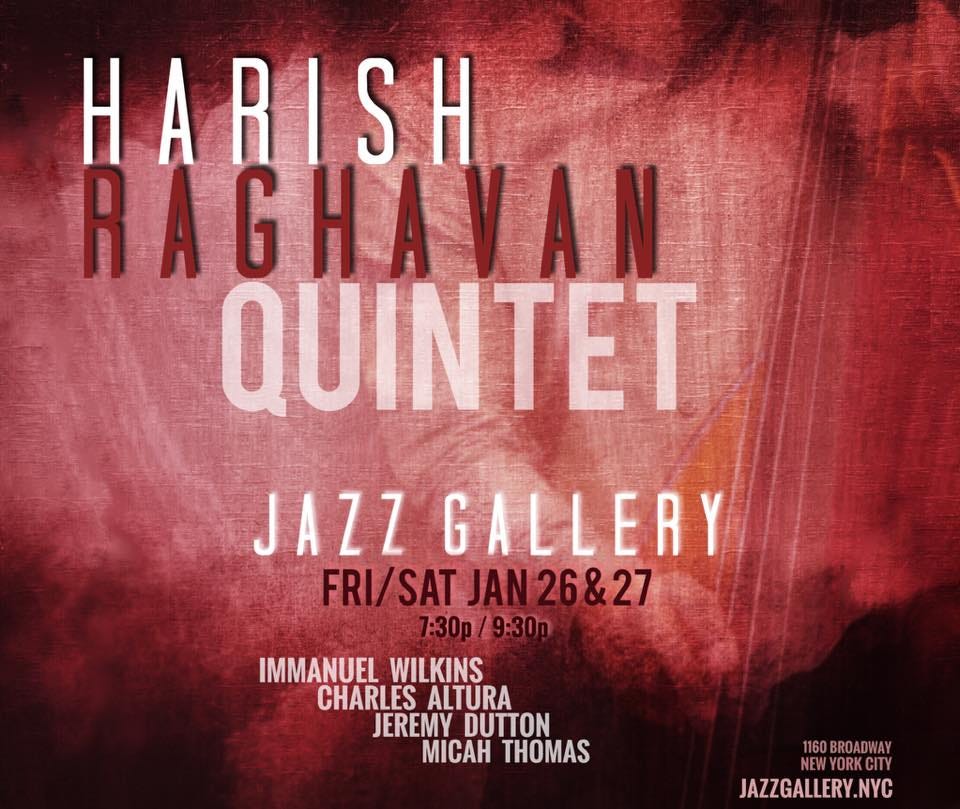
January 28, 2018 on Immanuel Wilkins (playing as a sideman with Harish Raghavan at the Jazz Gallery):
I forgot to write it down here but I had a really moving experience hearing and seeing Juilliard student Immanuel Wilkins with Harish Raghavan Quintet at The Jazz Gallery this weekend. This young man has some serious talent.
A beautiful, searing tone, at times he sounded electrified when he was completely acoustic (he was smartly paired with Charles Altura, evoking a Kenny Garrett-John Scofield-esque tandem from “Works for Me”).
I realize I am way late in seeing him live. I know he’s been around. I was aware of his Jazz Gallery Mentorship series at SEEDS:BROOKLYN and elsewhere with Aaron Parks a couple years ago and his recent playing with Jason Moran’s MONK: IN MY MIND, but he really wowed me with boundless energy and palpable enthusiasm for Harish’s music, which was very strong (I missed their December gig at The Owl).
I later learned that Wilkins was playing with the drummer from his own band, Jeremy Dutton, whom I had not seen before either, but heard a lot about in recent times. This young man will surely join Justin Brown, Kendrick Scott, Marcus Gilmore, Craig Weinrib, Obed Calvaire, Colin Stranahan, Mark Guiliana, Nate Wood and many others as one of the essential drummers playing so-called “jazz music.”
The 20-year-old much-buzzed-about Juillard student & pianist Micah Thomas also has a very promising future, as was clearly the case here (with echoes of Parks, David Virelles, Fabian Almazan, Sam Harris) but I need to see him again to really explore what we can do. He was impressive. I was glad to finally hear what the buzz was about.
It made me realize that I am a little bit out of touch with what is current. I say this without hesitation. I started coming to NYC as a serious listener in 2005, while I was still in college. The Jazz Gallery was originally my primary home for listening. I remember taking those steps up to the second floor of the Hudson Street location. I was so taken with the energy of my generation of players - Ambrose Akinmusire, Aaron Parks, Logan Richardson, Ben Wendel, Harish Raghavan, Dan Tepfer, Joe Sanders, Walter Smith III, Darcy James Argue’s Secret Society, Linda May Han Oh, Matana Roberts, Tyshawn Sorey, and of course a slightly more established group of artists: Vijay Iyer, John Hollenbeck, John Ellis, Dafnis Prieto, Rudresh Mahanthappa, Miguel Zenón, Jeff ‘Tain’ Watts, Jason Moran, Yosvany Terry and others.
We are witnessing a changing of the guard and it’s exciting but also a bit of a brave new world. The chances these players have for press are far lessened (listings for gigs are at an all time low).
But the discovery process is being facilitated by Instagram, sometimes Spotify or Apple Music playlists, and the mentorship of a new generation of “elders” who are offering apprenticeships in their own bands or through educational programs they run: Iyer, Moran, McBride, Watts, Mahanthappa, Douglas. I am sure I’m forgetting some.
It was good to get this shot in the arm of young players and their fire. Thanks to Harish for putting this band of mostly young musicians together to showcase the next wave of musicians who will hopefully make an impact. It also was reminded me that The Jazz Gallery is one of the most essential places to hear the next generation of this music (among many other Important spots like The Stone, Smalls, Roulette, Korzo and Arts for Art).
The Gallery’s Rio Sakairi is taking big and importance chances on the new talents of this music. Pay close attention to what they are doing. Their slogan “Where the Future is Present,” rings truer than ever.
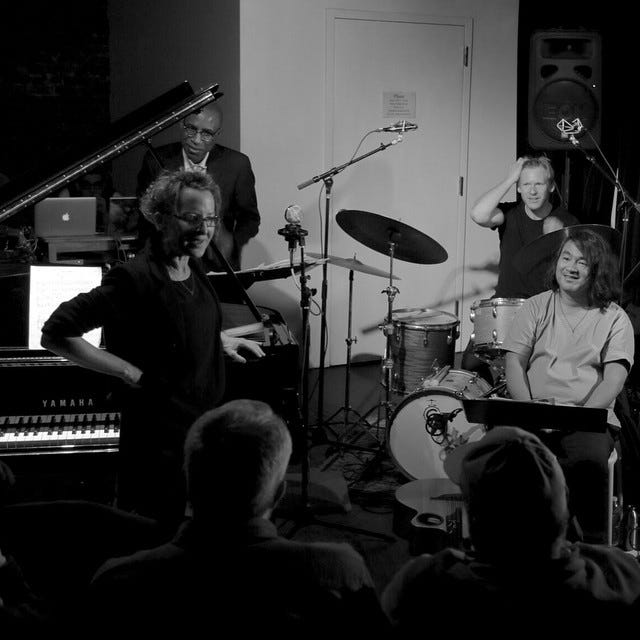
February 26, 2018 on the closing of the old Stone at Avenue C and 2nd St.
R.I.P. to the original Stone. This original iteration of the venue will live on in my memory. Saw many transformative shows there. I was shocked when my now-wife Andreea told me that The Stone was her favorite venue in New York (I honestly can’t remember if she told me this before or after we were married, but it further sealed the deal on why we were together). She said she loved that it was just music, a bathroom and chairs; no frills.
I’m glad that the artists will continue to present their work at The New School Glass Box and National Sawdust and The Drawing Center. It will never be the same though and it will take some getting used to.
Some particularly memorable shows:
Erik Friedlander’s Claws & Wings; Masada String Trio; Tyshawn Sorey with Koan and solo; Berne, Black, Cline aka The BBC or BB&C; Kris Davis Duopoly; The Nels Cline Singers; Cyro Baptista & Banquet of the Spirits; Scott Amendola Band; Peter Evans solo & quintet; Mary Halvorson Trio & Quintet; Nels Cline & Julian Lage; Steve Lehman Octet; Vijay Iyer Trioing + Fieldwork; Marco Cappelli’s In The Shadow of No Towers; John Zorn conducting The Dreamers; Marc Ribot’s Ceramic Dog; Ben Goldberg’s Unfold Ordinary Mind; Myra Melford’s Snowy Egret & The Same River Twice; Uri Caine Trio; Theo Bleckmann, Gary Versace, Ben Monder, Chris Tordini, John Hollenbeck; Henry Grimes with Marc Ribot & Chad Taylor; Matana Roberts Coin Coin: Chapter 1
and so many more….
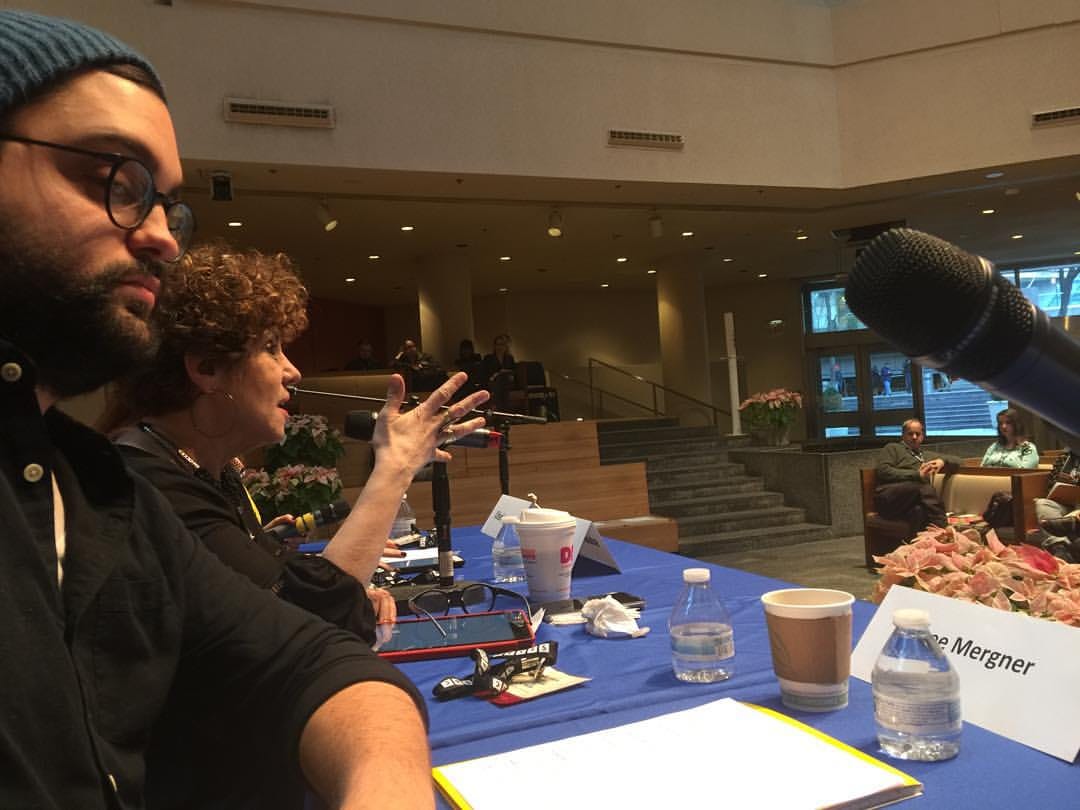
November 29, 2018 on the music industry needing new infusions of talent and all of us, including myself, not doing enough.
This thought often crosses my mind and certainly there are exceptions to this, but jazz is largely controlled by older people (historically white men). What if a tiny fraction of all “jazz school” or conservatory or even liberal arts graduates came to work in the jazz booking/promotion/fundraising/marketing/journalism/radio worlds. Our business of jazz constantly needs new infusions of young talent unbound to the old ways of doing things, and with actual passion for the music. I don’t think we as industry leaders are doing enough to recruit and mentor the future managers and booking agents; the future support staff of the industry that makes it go round. The jazz schools are very clearly producing a glut of supply for too little demand. I wonder your general thoughts on this. I often feel we have too many people working in the jazz business who know very little about the actual music and it’s just a job for them; not a passion. I do not seek to attack anyone individually here but I do feel this is a problem and there is a solution; mentoring young talent who have demonstrated a passion for the music but have limited career prospects because of the glut of young musicians exiting school.
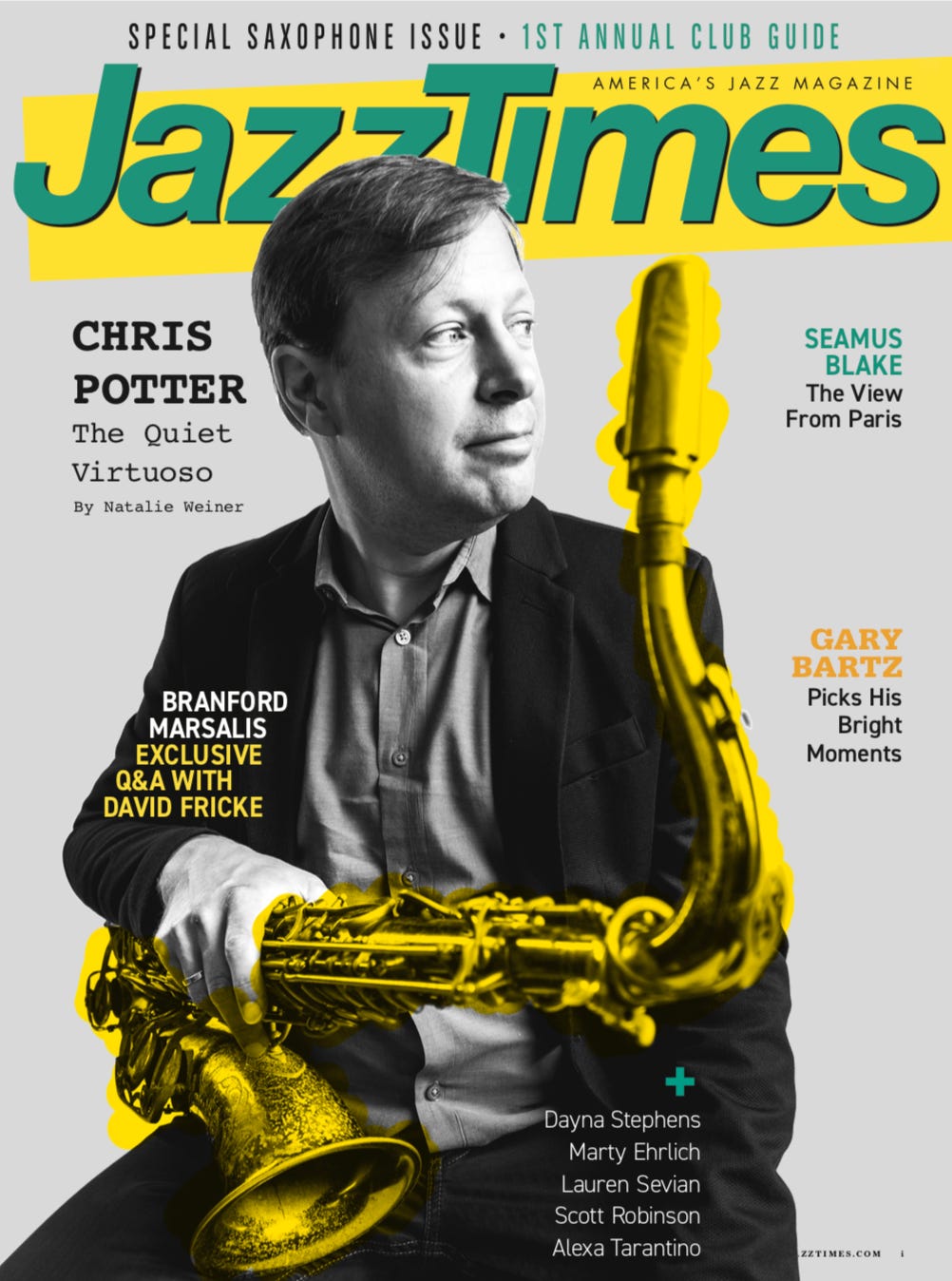
May 18, 2019 praising my colleagues at JazzTimes for a great sax issue, which you can now read on the digital archive of the new and improved JazzTimes.com
If you like the saxophone, you should definitely pick up this month’s issue of JazzTimes (online in the App Store) or on the newsstand). This issue could very easily be called “the state of the horn” boasting a who’s who of those at the top of the field, underrated cats and upstarts.
The cover story is a highly philosophical interview with Chris Potter; more no-nonsense talk from Branford Marsalis; a much-needed discussion with and appraisal of altoist Marty Ehrlich, an historical survey of Gary Bartz recordings; a wonderful and also much needed update on tenor saxophonist Seamus Blake, who now mostly lives in Paris but goes where the music takes him; a story on multi-instrumentalist Scott Robinson’s 1924 Conn tenor; a well-deserved feature on the young rising star altoist Alexa Tarantino; a playlist of choice baritone sax cuts by Lauren Sevian and a killing Before & After with saxophonist & EWI artist Dayna Stephens and much more.
Also a new (monthly?) column by Ethan Iverson. I just read it cover to cover. I rarely do that with a magazine — even a jazz one. Bravo Mac Randall and his staff of talented writers including Natalie Weiner, Ashley Kahn, Evan Haga, Mike West, David Fricke and more.

June 4, 2019 on persistence and email etiquette and the realities of being really busy, even if you want to reply to everything.
I apologize if you’ve emailed me in the past and I haven’t responded to your inquiry, especially if it was about working together or it was a media inquiry. I get a lot of inquiries and a lot of email in general.
Sometimes emails come in at inopportune times; when I’m deep at work on something or at a personal time/on a weekend and I’m trying to stay away from my email. Sometimes those emails get buried in my inbox underneath dozens or hundreds of other newer emails (many from existing clients) and I don’t see them for a while until I clean out my inbox (which I did this week thankfully).
I sincerely try to reply to everyone and listen to the music that I am sent, closely and offer you my sincere thoughts or feelings. Other times people write emails that are way too long (kind of like this Facebook status). Those are the times when it’s best to pick up the phone and give me a call. My numbers are on my website or plenty of other places online.
I appreciate those of you who are persistent. You are the ones who have a higher chance of succeeding in this business. You cannot be sheepish about following-up after one email. This carries over to bookers and the media or really any other industry figures. Be less discouraged if an agent or manager doesn’t respond or gives you a stock ‘no’ reply.
It usually means that they are in over their head at that moment, just trying to eke out a living with the 10 or more clients they already have. It does, however, help a lot if you know what I do and you’ve researched me and my tastes. Emailing me about a hip-hop record or a noise project or a string quartet is not the best idea, but I still try to respond to everyone and provide my best insight.
I also offer one-on-one consulting sessions; which I feel more people in the industry should do; sometimes it’s not warranted to drop several thousand dollars on a PR campaign; instead it’s better to do one or two consultations and learn where you have to get to before you’re ready.
Just because this is how I feel, it does not necessarily hold true for others in the business. I know some people are just too busy to respond to every email inquiry. And some just don’t care to. I am sure many others get a lot more cold emails than me; including many in the press.
Dec 18, 2019 on topics that still baffle me and will be addressed forthwith. There is some great commentary here from some real experts in the field. I highly recommend watching the video:
Please come to my Jazz Congress panel Jan 13th at 11:00 AM
“How To Build Buzz for Gigs in the Post-Listings Era”
In an age when media outlets have less space for listings, radio interviews are harder to come by, and many newspapers are doing little in terms of editorialized pre-gig listings, it is increasingly important to rethink how we all approach gig publicity and pre-show/pre-festival promotion. The professionals assembled on this panel collectively have 30+ years of experience marketing to audiences online through social media, digital marketing, retargeting campaigns and other solutions. This session will provide specific insight into how the modern-day musician or presenter should approach marketing gigs to current and potential fans.
Thrilled to be joined by:
- Adrienne Stortz, Director of Programs and Finance, Miller Theatre
- Zooey Tidal Jones, Director of Public Relations and External Communications, Jazz at Lincoln Center
- Marquis Hill, trumpeter/composer
- Sydney Hill, social media, Red LightcManagement
Dec 30, 2021 on professional validation:
When I heard from Francis Davis in November that NPR had decided to drop the annual jazz critics poll, I was a little surprised. Almost immediately, myself and a few other fine jazz PR folks who also value this poll — not only for the professional prestige it carries for us and our clients, but the chance for musical discovery it can lead to — hurried to find it a new home so it could actually happen.
I am happy to have helped connect Francis Davis with the wonderful folks at The Arts Fuse (a wonderful Boston-based arts website). Thanks to Bill Marx for giving the poll a platform. I’m so proud of my clients, other friends, past clients and musicians greatly I admire who made it onto the poll.
Obviously this poll is neither a barometer of what is “best” nor what was popular among fans. But, this poll allows me to sort of measure my own success in the past year by the success of my clients. Of course the music always comes first. That’s why I do this instead of being a critic myself or getting a corporate advertising gig, both of which I think I could be pretty good at.
Being a jazz publicist is a terribly thankless job in which most of us face immense apathy (from the media) on a daily basis as well as intense scrutiny by many of our clients, despite our immense passion about our clients music and stories. Most of us are super fans. Many are former musicians, myself included.
I don’t seek the spotlight. (I mostly dislike it when clients call me out at shows or on social media). I am, of course, extremely proud of my clients and my team, but also myself. This is one of the only measurements I have in the business to gauge how my job had an impact on people hearing and appreciating the music I was entrusted to promote.
So thanks to the critics who made lists for making a guy feel like he’s making a difference.
May 23, 2022 briefly memorializing the 55 Bar.
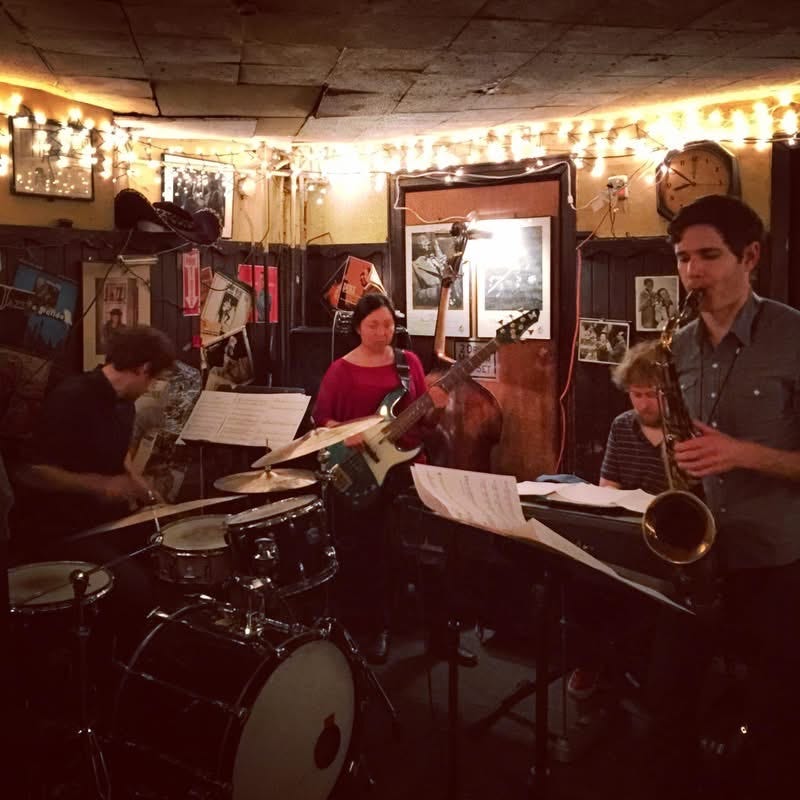
The 55 Bar will always be synonymous in my mind with Mike Stern, Chris Potter, Adam Rogers, Nate Smith, Fima Ephron, Dave Binney, Wayne Krantz, Ben Monder, Sean Wayland, Wil Lee, Rudder, Ben Perowsky, Pete McCann, Brian Charette, Tim Lefebvre, Henry Hey, Dan Weiss, Nate Wood, Henry Cole, Amy Cervini, Fay Victor, Jo Lawry, Linda May Han Oh, The Le Boeuf Brothers, Ben Flocks and so many more. One of the only places in the world I would wait in the rain or snow for over an hour to hear music. I will not shed any tears however, over the bathroom or the $7 cranberry juices.
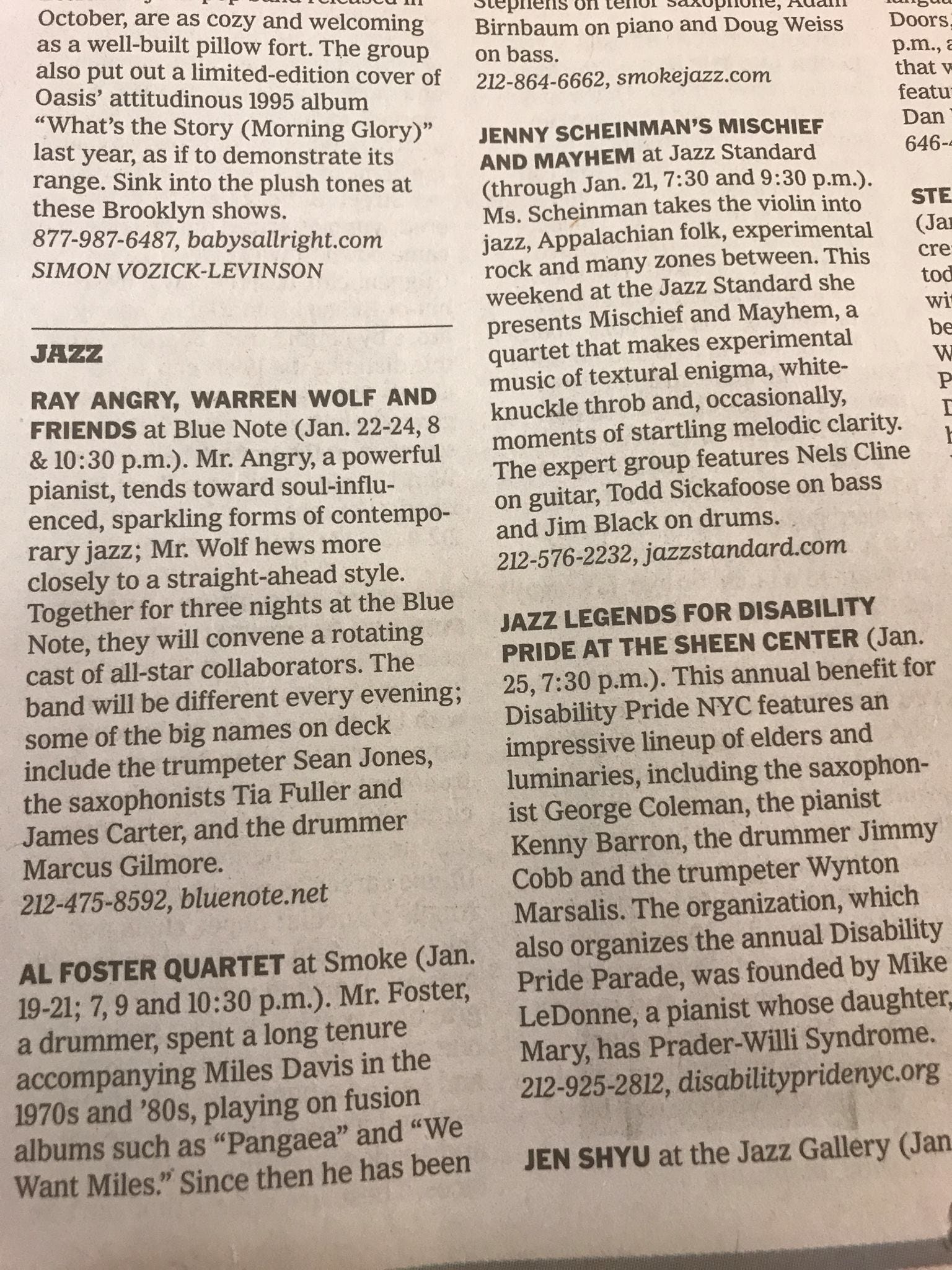
January 5, 2023 on the ongoing death of listings and a momentary moment of hope with regard to that before everything fell apart from “legacy media” and went to Substack. I accede that Hank Shteamer‘s recent listings for both Jazz Generations Initiative and Gothamist render this observation a bit obsolete but these dispatches are not meant to be timely now. They are historic and fleeting, at best.
In case you have not noticed, during the pandemic the NY Times quietly dwindled (read: all but cancelled) their relatively-recently-still-somewhat-robust cultural listings in all disciplines - not just music.
Sources I’ve talked to, with knowledge of the decision, indicate they did so because the listings website pages had relatively few click counts compared to feature stories. Granted, ONCE EVERY OTHER WEEK, a Times-affiliated critic picks ONE JAZZ GIG to represent the massive continuum of creative music that happens in NYC on a nightly basis.
Of course, proper album reviews and concert reviews are a thing of the past (at least for the Pop Music desk (which strangely governs jazz-related content, while the classical desk has a completely independent group of staff critics, editors and a plethora of freelancers given much wider latitude to cover the music that that owners of The NY Times historically have deemed worthy of extensive coverage; still that desk does some nice things for “jazz” so I’m not 100% mad at them, but still..) Even though it’s been proven that album and concert reviews matter not only in the development of artists careers, but in the development of an audience for musicians and other creatives who are working in one of the most significant cultural hotbeds in the world to be discovered by the nationwide and worldwide readership at the times. Fergodssake, I get a daily email on wellness and how to build meaningful friendships from the Times. Aren’t music and the arts directly linked to wellness???
It’s been YEARS since Time Out New York has been any kind of beacon of anything in terms of serious cultural events, The Village Voice is all but gone (revived by a shady profit-driven SoCal conglomerate that ruined the LA Weekly) employing a majority of non-New Yorkers and The New Yorker now lists one jazz gig and two classical gigs per week (down from 3-4 just a few years ago), with indie rock, hip hop, electronic music, R&B and sometimes “noise” filling out the rest. One of the key functions of newspapers, alternative weeklies and radio when most of us were growing up, even though I didn’t grow up in New York City, was a source for critically sourced listings, and that has been completely obliterated by the insidious crumbling of print media in a culture of free, and a race-towards-the-bottom mentality in editorial circles, which are driven by view counts. BUT, THERE ARE NEW SIGNS OF LIFE, PARTICULARLY AT WNYC.
One of the inspiring developments of late has been the installment of Steve Smith as Arts & Culture Editor at WNYC/New York Public Radio/Gothamist. Steve (whom we all know from his work at The Times, The New Yorker and as former music editor of Time Out) is writing a diverse set of listings and features in several disciplines for a weekly post on Gothamist.
Just this week, the culturally omnivorous and community-focused scribe Piotr Orlov has joined WNYC, mind you, on a temporary basis (fresh on the heels of his TRULY ESSENTIAL substack Dada Strain // Bklyn Sounds (which includes way more than annotated Brooklyn music and art listings)). Check Piotr’s remarkably well-written piece of reportage on Arts For Art’s imminent “Studio Rivbea Revisited” being held at the 24 Bond Street location that originally housed the legendary Studio Rivbea, run by Sam Rivers and his wife Beatrice in the 1970s. The fact that this space is not a condo for the ultra rich is something of a marvel and the lineup features a whos-who of the new and old guards in so-called “avant-garde” NY-centric music, chiefly made by Black Americans of the last 60 years from Dave Burrell, Williams Parker, Ahmed Abdullah to Darius Jones, James Brandon Lewis and the young firebrand Isaiah Collier.
This is just a start but it’s something. (N.B. Even though Jim Macnie lost his longtime gig as an expert blurber of jazz happenings at The Village Voice (what used to be referred to as “Voice Choice[s]”) he keeps the tradition alive on his essential Lament For A Straight Line blog with weekly postings about essential gigs, from the ear of someone who has been living in and commenting on NY’s creative music scene since the early 1980s).
All that said, we, as a community need to confront these issues by writing passionately to the publications that have forsaken us not only as artists and organizations, but as avid concertgoers, theatergoers, dance patrons, moviegoers and art gallery goers, among other interests. Please message me and let’s ORGANIZE our efforts!
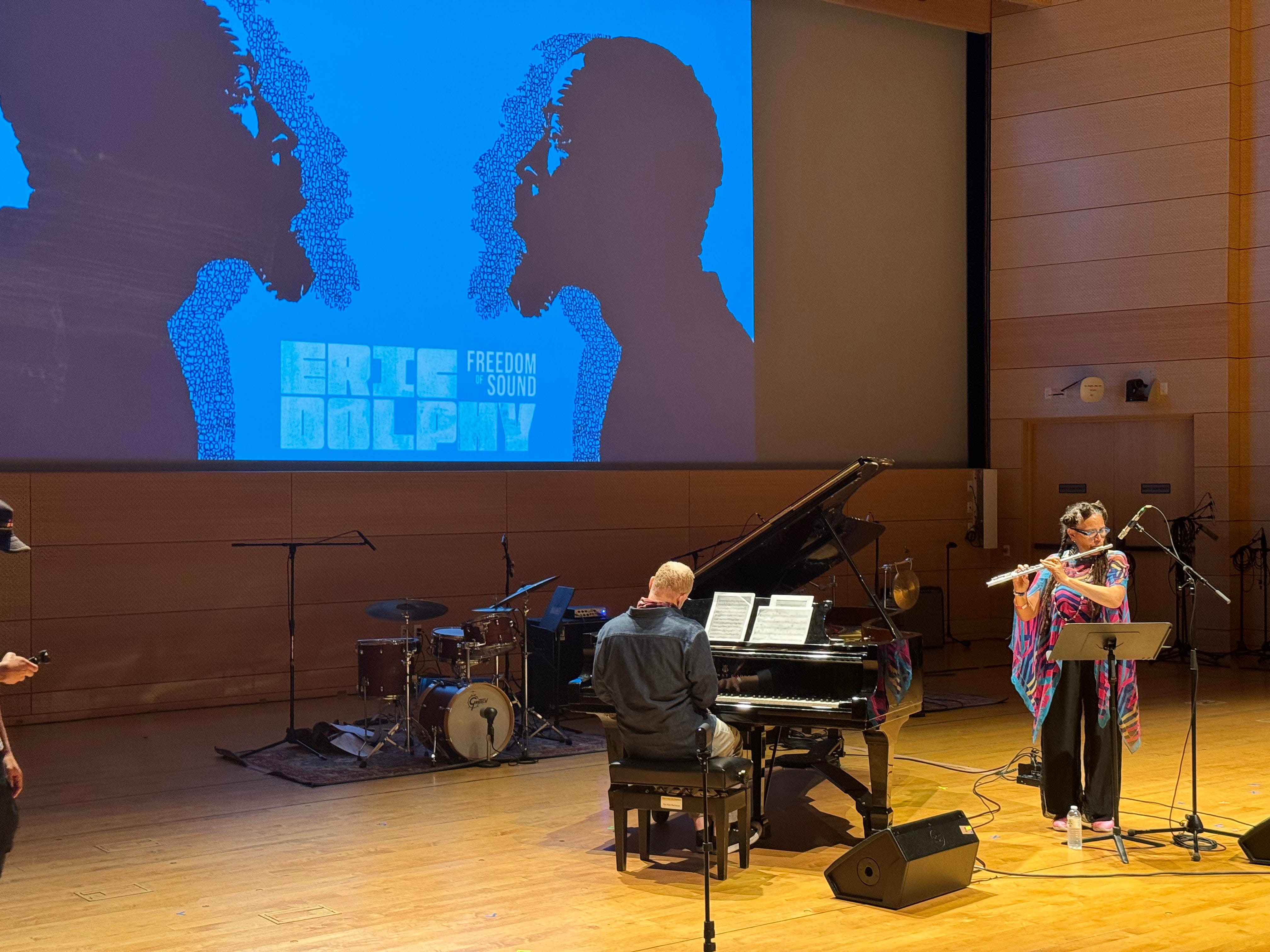
June 5, 2024 on a night at the New School celebrating Eric Dolphy. Shoutout Seed Artists & The New School Jazz & Contemporary Music.
This past weekend I witnessed the second half of Day Two of the amazing Eric Dolphy: Freedom of Sound festival at The New School’s Tishman Auditorium presented by Seed Artists (Pheeroan akLaff and Chris Napierala). Apparently this was only the second Dolphy festival since the inaugural edition a decade ago in Montclair, NJ, which famously featured the late Richard Davis, a key Dolphy collaborator. That event certainly does not feel like was a decade ago. Oy vey.
By the time I got there after attending my daughter’s year-end ballet recital and a kids birthday party, everything I saw was a highlight. James Brandon Lewis’ modified quartet with Kirk Knuffke, Chris Lightcap and Chad Taylor was like Red Lily Quintet, with even one or two of that band’s repertoire, but without a cellist. It was lean and mean-ingful. I believe they played some Dolphy repertoire that had never been performed publicly before.
The duo of Craig Taborn and Nicole Mitchell, arguably the chief reason I made the trek from Westchester, was partly intended to evoke Eric Dolphy’s private duo sessions with Cecil Taylor, which Napierala described as being cathartic for Dolphy when he wasn’t getting any attention for his music in the early 1960s and was really down in the dumps. These sessions happened in private and no known recordings exist. When Nicole and Craig played, they went to their own place and the music did not sound Cecil-sh in the least, at least to these ears. It was quite plucky and very soulful, almost like a religious communion. The pieces were often miniatures and while I waited for Craig to go full Cecil, he never quite went there. Mitchell played within her idiosyncratic flute range with the occasional vocal tone matching of a line she was playing in real time, switching with perfect pitch between flute and her own falsetto, something I always marvel at in her soloistic approach.
Last but not least, we were treated to a large ensemble finale performance of a Geri Allen commission for Eric Dolphy. Allen did her doctoral dissertation on the late master while studying at the University of Pittsburgh in the early 1980s. This piece Celebration Suite for Eric Dolphy has no known remaining score. So pianist Angelica Sanchez transcribed the entire piece from a YouTube video linked above from Europe in 1989. The band was a true intergenerational all-star group comprising Sanchez on piano, James Brandon Lewis on tenor sax, Kalia Vandever on trombone, Amir Elsaffar on trumpet, Jay Rodriguez on clarinets, Jaleel Shaw and T.K. Blue on alto saxophones, vibraphonist Patricia Brennan, recent rising star bassist Devon Gates and two drummers: Chad Taylor and Pheeroan akLaff, who was the sole member of the original Allen ensemble. This performance was transcendent with marvelous solo turns from Elsaffar, Shaw and akLaff. It was the icing on the cake, as they say.
Sanchez, it’s worth noting, has been on a scorching creative streak these last 15 years. Her recordings for the Clean Feed, Sunnyside, Intakt and Pyroclastic labels are consistently among the best things I’ve heard in contemporary creative music with both composition and improvisation on an incredibly high level, not to mention the incredible bands she assembles as on 2023’s Nighttime Creatures. Also she’s now a VIP up at Bard College, running the jazz program there and is co-hosting a very special summer improv session in cahoots with fellow pianist Kris Davis called International Music Creators and Collaborators Workshop (IMCCW) running June 23-28, which boasts an insane one-week Summer Faculty including Dave Holland, Terri Lyne Carrington, Billy Hart, Taylor Ho Bynum, Jeff Parker, Larry Grenadier and dancer Christiana Hunte. Here’s hoping for a public performance.
Big big thanks to the team at Seed Artists that put this event together and Dr. Keller Coker, the Associate Dean of the New School and head of it’s jazz program. You can still go buy a t-shirt if you missed the events, here.
I have to thank Don Lucoff for recognizing my talent and giving me a shot in this business. Brad Riesau, Steph Brown and Diana Nazareth also deserve immense credit for teaching me the ropes.
Those of you who know me best, know that I always try to publish a favorite recordings list at the end of the year. What other publicists do this? None. At least in my field. Some years I really wrestle with whether or not to include client recordings on those lists, and at this point I really don’t care anymore if you paid me or not. As long as it’s memorable and I might listen again after the year is over out of free will, it goes on the list.
Obviously, I’m not alone, according to this massively popular and widely shared article on middle-aged liberal arts-educated Gen X folks who feel outmoded or underemployed in the workplace.
And a wonderful therapist who has helped me through a lot of this uncertainty to get to the best version of myself I’ve realized so far.
Thanks again for your very kind words about the June 2019 JazzTimes. The music-journo dream is long over, but it was a privilege and a pleasure to be one of the dreamers for 30-plus years.
"people still want and need to tell stories, so they keep telling them somehow." - That to me is the key, and motivational. Your story of the Dolphy tribute conccert made me want to be therre (granted I was bringing a lot of knowledge of the noted musicians to your text). Thanks for spreading word of music -- so ephemeral, yet meaningful, impactful, significant. Whatever the medium, however the finances flow or don't, keep telling people about this fascinating topic. On Int'l Jazz Day, Pope Leo as well as UNESCO, Gov. JB Pritzker and a few dozen brilliant musicians attested to the value of jazz. We are apparently on the right track.